May to October, the dry season, is prime: wildlife concentrates on permanent water and the Okavango flood is at its fullest between June and August — the paradox that the delta is wettest in the dry months, because the flood arrives from Angola’s distant rains. July to September is the classic window for both water and land game.
Botswana
A river that never reaches the sea, spreading instead into a glittering delta in the middle of the Kalahari. Africa’s wild, kept uncrowded on purpose.
| Best for | Water safaris by mokoro, huge elephant herds, pristine low-volume wilderness |
|---|---|
| Time needed | 6–9 nights across delta + Chobe, usually flying between camps |
| Getting there | Fly via Maun (delta) or Kasane (Chobe); light aircraft to camps |
| Best months | May–Oct dry season; the delta flood peaks Jun–Aug |
| Pairs with | Zambia’s Victoria Falls (an hour away) and Namibia’s dunes |
When is the best time to visit Botswana?
Why is Botswana more expensive — and worth it?
Botswana chose, decades ago, a deliberate high-value, low-volume model: fewer beds, larger private concessions, strict vehicle limits. You pay more, and in return you rarely share a sighting, off-road and night driving are permitted in the concessions, and the wilderness stays genuinely wild. For travelers who have done a busier safari and want space and exclusivity, nowhere does it better. We are honest that it is a premium destination; we make sure the premium buys what it should.
Honest trade-offs
- It is a fly-in safari. Camps are reached by light aircraft with strict luggage limits (soft bags, ~20kg). That is the price of accessing untouched country — and the flights are half the spectacle.
- Water vs land depends on the flood. A pure water camp in a low-flood year can disappoint; we place you where the mokoro will actually glide, and often mix a water camp with a land camp.
- Green season (Nov–Mar) brings the Kalahari to life with newborns and migratory birds at much lower rates, traded against heat and afternoon storms.
Botswana questions we answer every week
What is a mokoro safari?
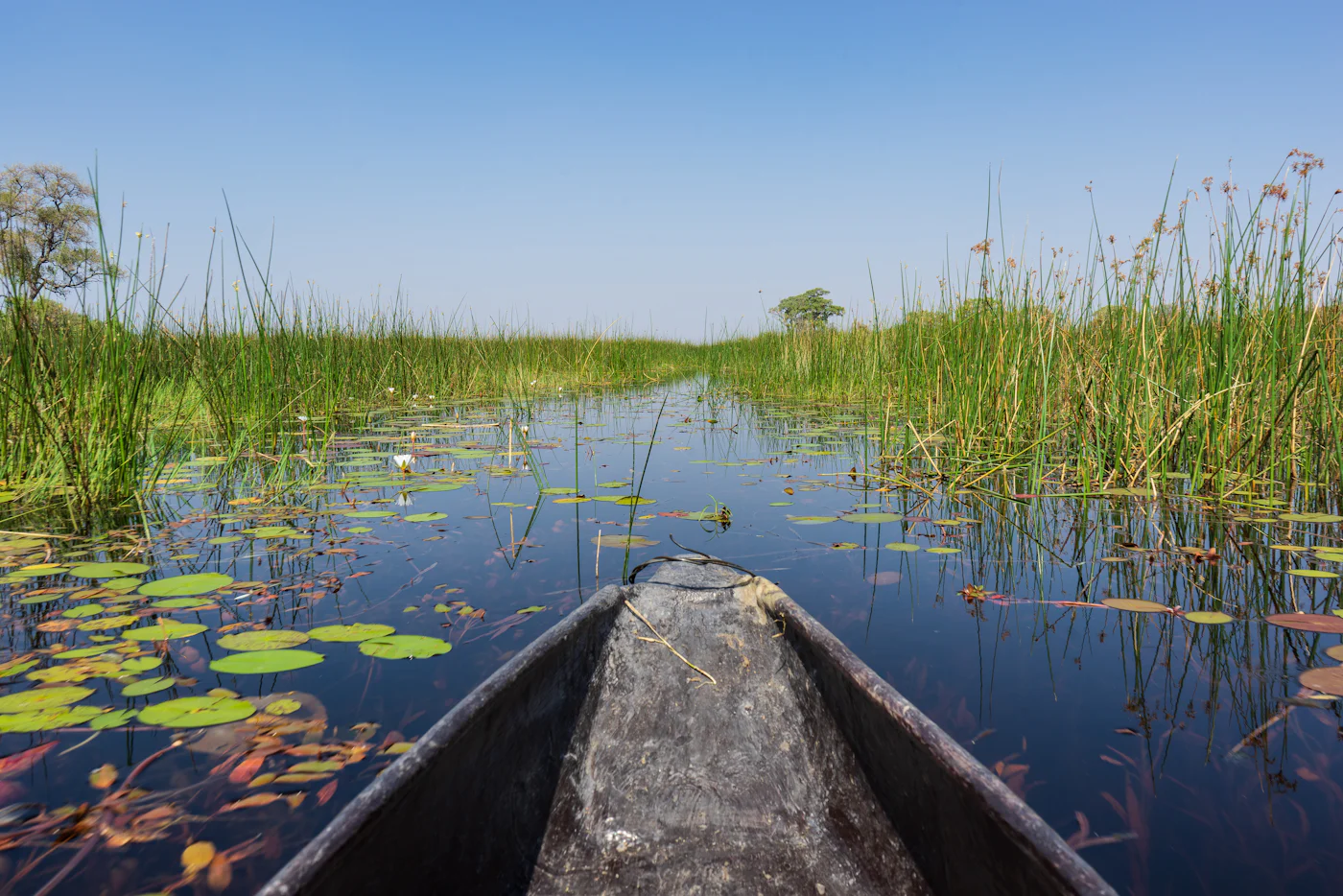
A mokoro is a shallow dugout canoe, poled from the back by a guide standing at the stern. You glide silently through the delta’s reed channels at water level — eye to eye with lily, frog and the occasional startled red lechwe. It is the delta’s signature experience: calm, close and unforgettable.
Will I see big cats and elephants?
Yes — Moremi and the delta concessions hold excellent lion, leopard and wild dog, and Chobe’s dry-season elephant gatherings are the largest on the continent, thousands strong along the river at dusk. Botswana pairs intimate water experiences with genuinely top-tier land game.
Can I combine Botswana with Victoria Falls?
Almost everyone does. Kasane (for Chobe) is roughly an hour from Livingstone and Victoria Falls, making a delta–Chobe–falls sequence one of the great southern journeys, easily extended into Zambia or Namibia.