Somewhere in the pages below is a morning that belongs to you — a river that falls off the edge of the world, an hour spent an arm’s length from a gorilla, a dune the colour of fire before sunrise. You’ll feel the pull before you can explain it.
Every place opens to reveal what makes it, and a pair of journeys we love built around it. Treat them as starting points — travel one chapter, or thread several together across borders. The choice, the pace and the price tier are always yours; a specialist confirms the exact quote before anything is booked.
The Trail · Nine Chapters
From the foot of Kilimanjaro to the tip of the Cape
Read them in order, or leap to the one calling your name. Tap any place to open its story and its ready itineraries.
Chapter 01
01
Tanzania
Where the plains remember every hoofbeat.
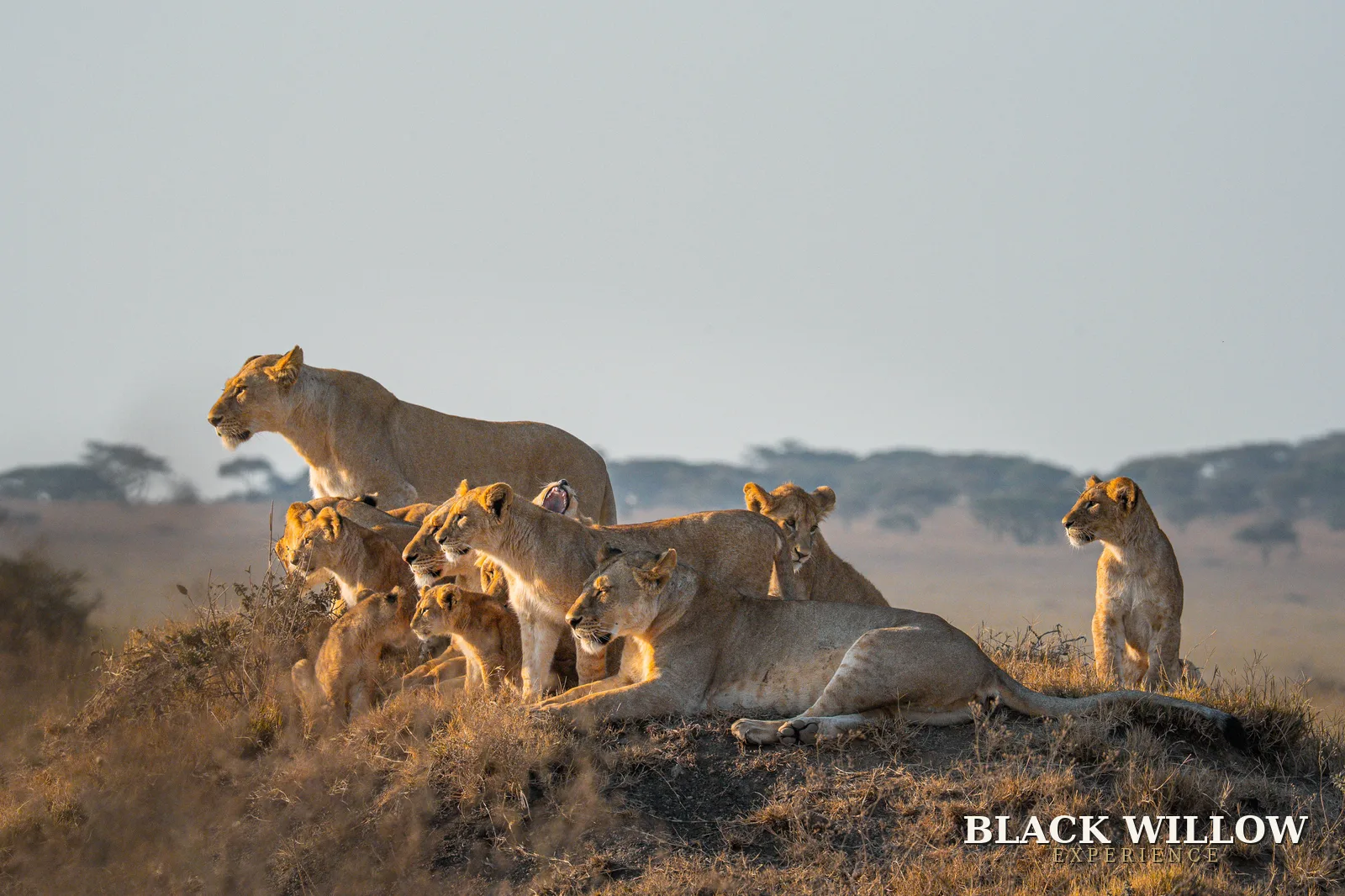
This is our home ground — we watch the sun find Kilimanjaro from our own doorstep. The Serengeti runs its horizon past the edge of what you thought was far. The Great Migration pours across the Mara River in a thunder of hooves and dust. The Ngorongoro Crater holds a lost world walled in green, and quiet giants drift beneath the baobabs of Tarangire. When the dust settles, the warm Indian Ocean and the spice-scented lanes of Zanzibar are waiting.
Tap a place to read it & see its journeys
The Great Migration
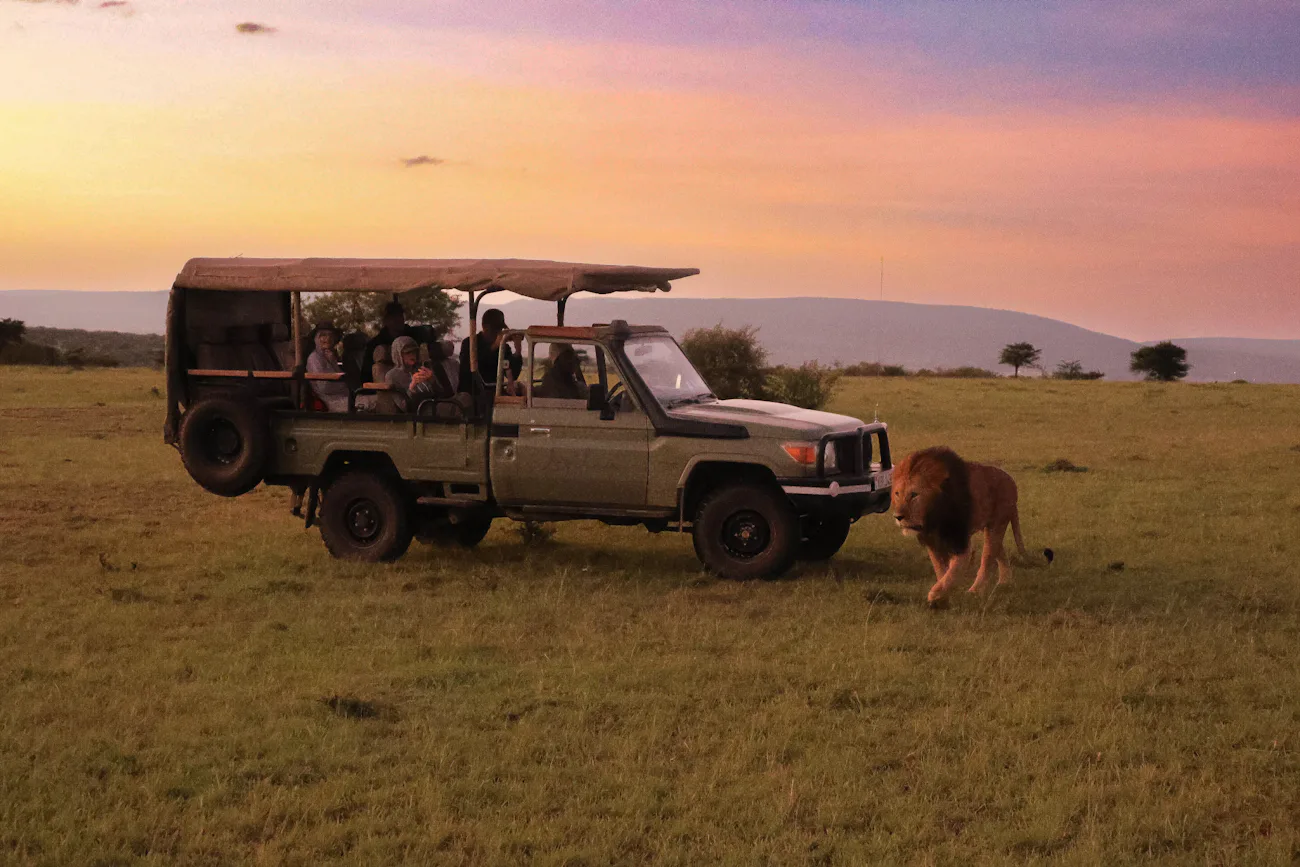
Nearly two million wildebeest, zebra and gazelle move in a continuous loop through the Serengeti–Mara ecosystem, chasing the rains. Calving fills the southern plains in February; the dramatic river crossings come in the north from July to October. We place you where it is.
Fourteen thousand square kilometres of open plains and Africa’s densest big-cat populations — the anchor of almost every journey we design. Where you sleep should match the month: south for the calving, the west in the green season, the north for the crossings.
A collapsed volcano nineteen kilometres across, its floor holding some 25,000 large animals — the densest big game on earth, and Tanzania’s best odds for black rhino. Enter at the six o’clock gate for three golden hours before the crowds.
Africa’s highest mountain at 5,895 m, a non-technical trek through five climate zones where the route — not raw fitness — decides whether you summit. Seven or eight days on the mountain gives the acclimatization that gets you to the top.
The northern circuit’s quieter jewels: Tarangire’s dry-season elephant herds beneath ancient baobabs, and Lake Manyara’s groundwater forest, flamingo-fringed lake and famed tree-climbing lions — a perfect half-day en route.
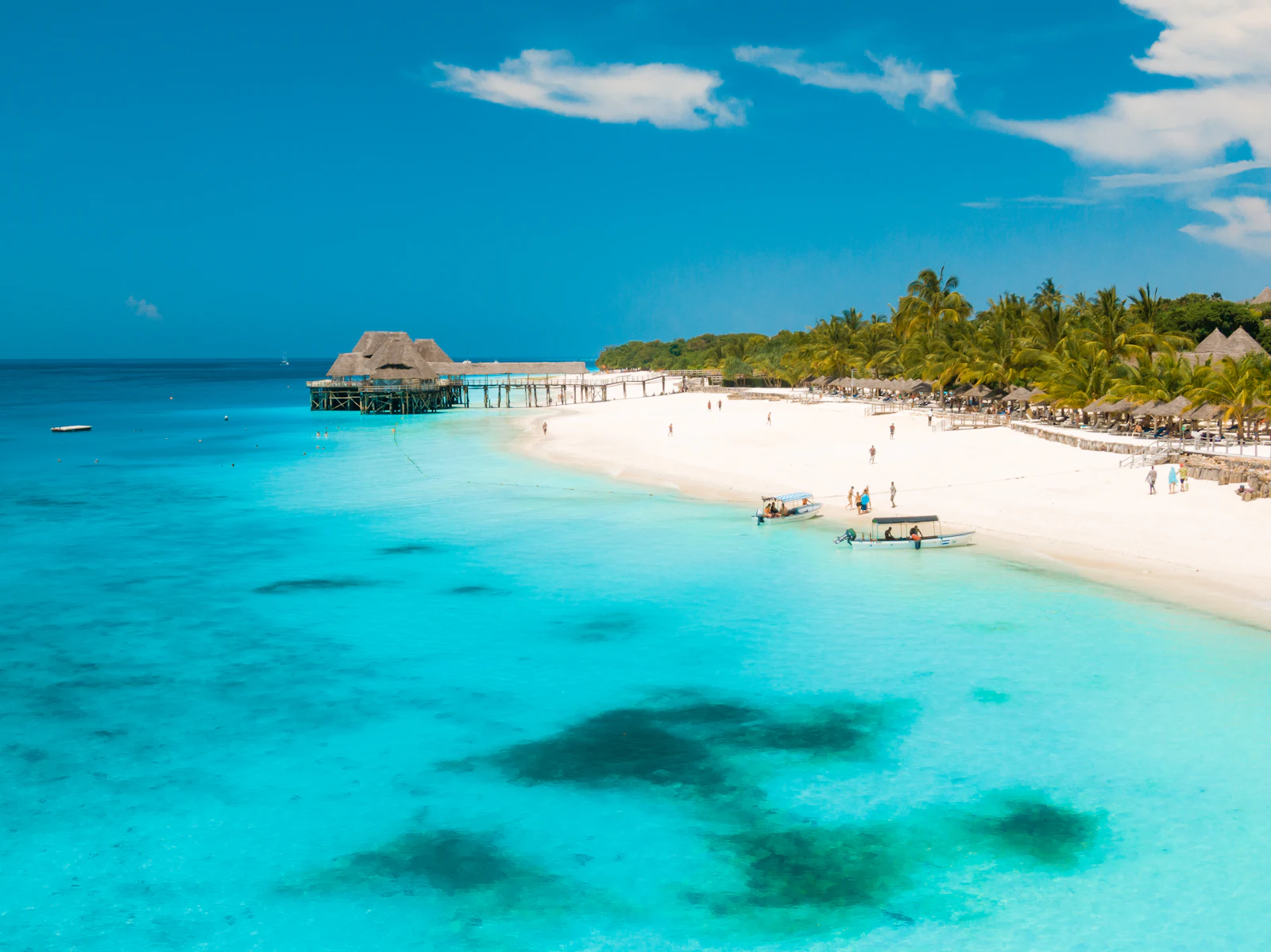
When the dust of the plains settles, Zanzibar is waiting. Stone Town is a UNESCO maze of carved doors, bazaars and the House of Wonders; the spice farms gave the island its name; and two coasts wait beyond — the tide-free north at Nungwi, the barefoot-quiet east at Paje. Snorkel Mnemba Atoll, meet the red colobus of Jozani Forest, and sail a dhow into a sunset with no hurry in it. Our founder’s home ground, and the natural final chapter of any journey.
Tap a place to read it & see its journeys
Stone Town & Prison Island
A UNESCO World Heritage maze of coral-stone lanes, carved doors, bazaars and the House of Wonders — then a short boat to Prison Island to meet the giant Aldabra tortoises and snorkel the shallow reef. One perfect day of history and colour.
The island’s liveliest, most swimmable coast — deep turquoise water at any tide, sunset dhows, and a fishing-village heart. The easy choice for first-timers and those who want to swim whenever they please.
Long white sand, barefoot lodges and the flat lagoon that makes the east the island’s kitesurfing capital. Quieter and wilder than the north, with village life continuing all around you.
The island’s finest snorkelling and diving — turtles, moorish idols and dolphin pods most mornings — reached by boat from the north-east. A dawn dolphin cruise and a reef swim make one of the trip’s best days.
A working spice farm — cloves, nutmeg, cinnamon and vanilla to see, smell and taste — paired with Jozani, the island’s only national park, home to the rare red colobus monkey and a boardwalk through the mangroves.
The country that taught the world the word “safari.”
Safari was born here, and Kenya has never forgotten how it’s done. Stand in the Masai Mara as a million wildebeest pour across the grass. Watch elephants cross Amboseli with Kilimanjaro filling the entire sky behind them. Find the rare northern species in the red country of Samburu, and let it all slow to the tide at Lamu, an island of no cars — only dhows, Swahili stone, and time.
Tap a place to read it & see its journeys
Masai Mara
The northern reach of the Great Migration and the most concentrated big-cat country in Africa. Private conservancies bordering the reserve cap vehicle numbers and allow off-road and night drives, so you rarely share a sighting.
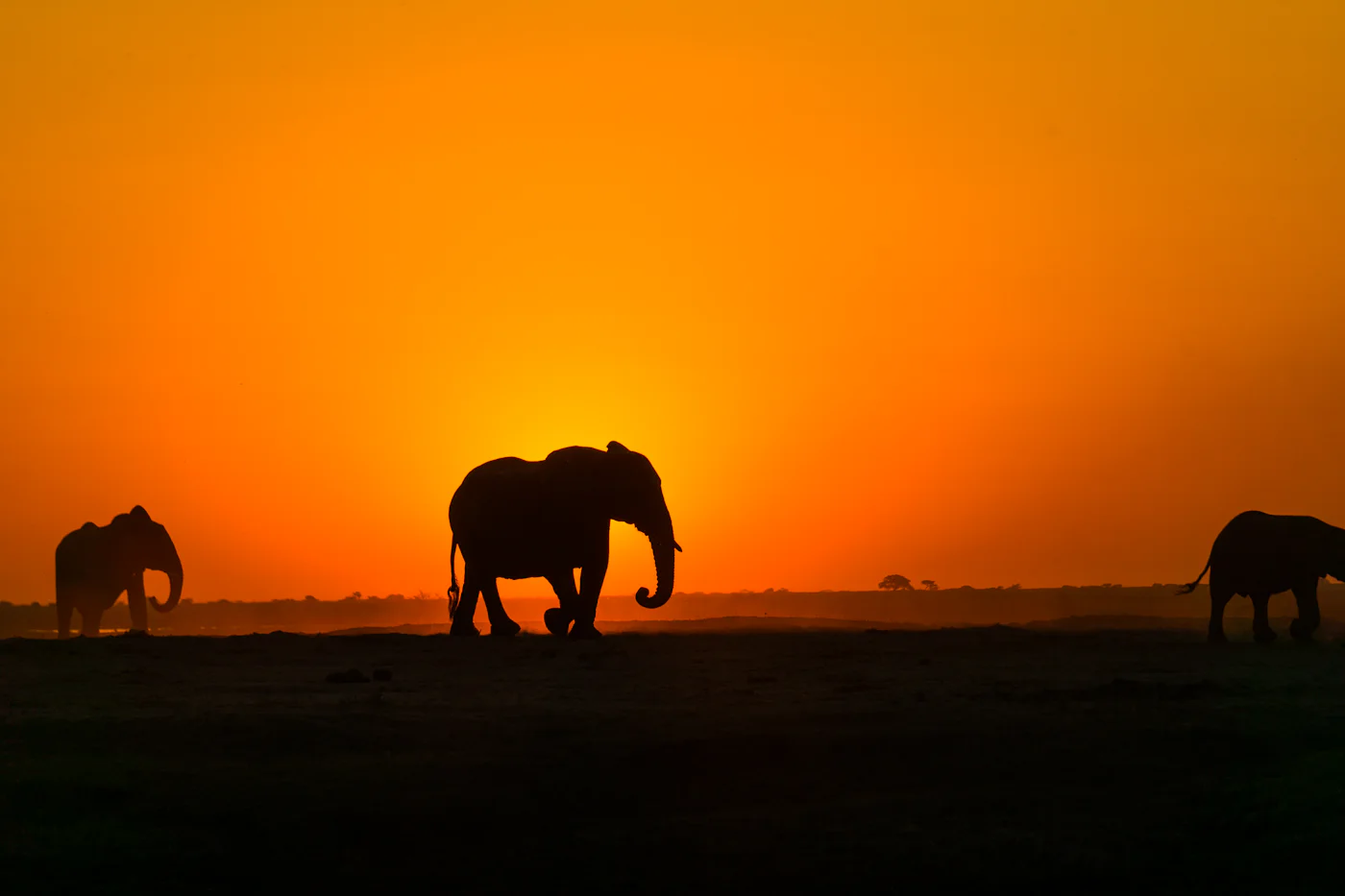
Big-tusked elephants crossing dusty pans with Kilimanjaro filling the whole sky behind them — the classic image of elephant-and-mountain photography, at its best in the golden hours.
Arid, red northern country home to species found nowhere else on the classic circuit: reticulated giraffe, Grévy’s zebra, the long-necked gerenuk and beisa oryx — the “Samburu Special Five”.
A patchwork of private conservancies leading Africa’s rhino and predator conservation, offering walking, horseback and night safaris that are rare elsewhere — wild, exclusive and quiet.
A Swahili island of no cars — only dhows, coral-stone lanes and centuries of trade-wind history, where the pace drops to the rhythm of the tide. The perfect slow finish to a Kenyan journey.
Uganda is where Africa goes to be lush. Trek into the tangled dark of Bwindi Impenetrable Forest and sit, breath held, an arm’s length from a family of mountain gorillas. Track chimpanzees swinging through Kibale, find the lions of Ishasha draped in fig trees, and stand where the Nile is born — a whole river beginning as a single roar out of Lake Victoria.
Tap a place to read it & see its journeys
Bwindi gorillas
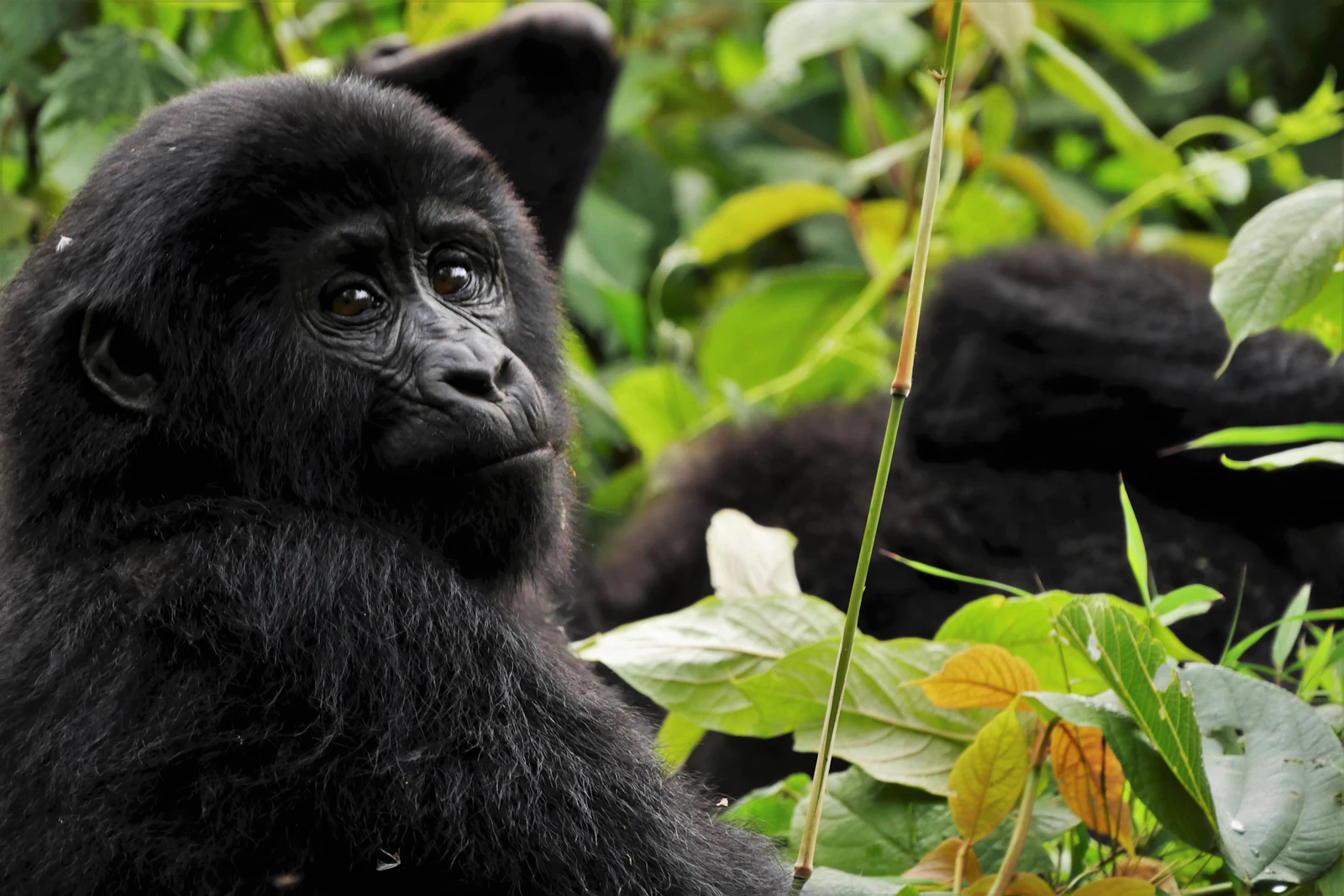
Nearly half the world’s mountain gorillas live in this ancient forest. One permit ($800) buys a trek of one to five hours and then exactly one hour, at about ten metres, with a habituated family — by broad consent the most moving wildlife encounter in Africa.
The finest chimpanzee tracking on the continent — a crashing, hooting, ground-level drama entirely unlike the gorillas’ calm, in a forest of thirteen primate species.
Savanna game between the forests: the Kazinga Channel’s vast hippo and elephant gatherings watched from a boat, and the tree-climbing lions of the remote Ishasha sector.
Where the world’s longest river begins, pouring out of Lake Victoria at Jinja as a single roar — a quietly momentous place to stand, with rafting and calm river cruises alike.
They call it the land of a thousand hills, and every one is green to its summit. Climb through the bamboo of the Virunga volcanoes to spend an hour with mountain gorillas. Walk the canopy bridge high above Nyungwe Forest, then come down to a coffee farm and follow the bean from red cherry to the cup in your hands.
Tap a place to read it & see its journeys
Volcanoes NP gorillas
Mountain gorillas on the Virunga slopes where Dian Fossey worked, just two hours from Kigali airport — the most accessible gorilla trek in Africa, on gentler ground than Bwindi. Golden monkeys wait in the bamboo the next morning.
One of Africa’s oldest rainforests: chimpanzees and thirteen primate species beneath a canopy walkway suspended sixty metres above the trees, among orchids and birdsong.
Follow the bean from red cherry on a terraced hillside to the washing station to the cup — Rwanda’s high-altitude coffee is among the finest in the world, and the farm visit is a quiet highlight.
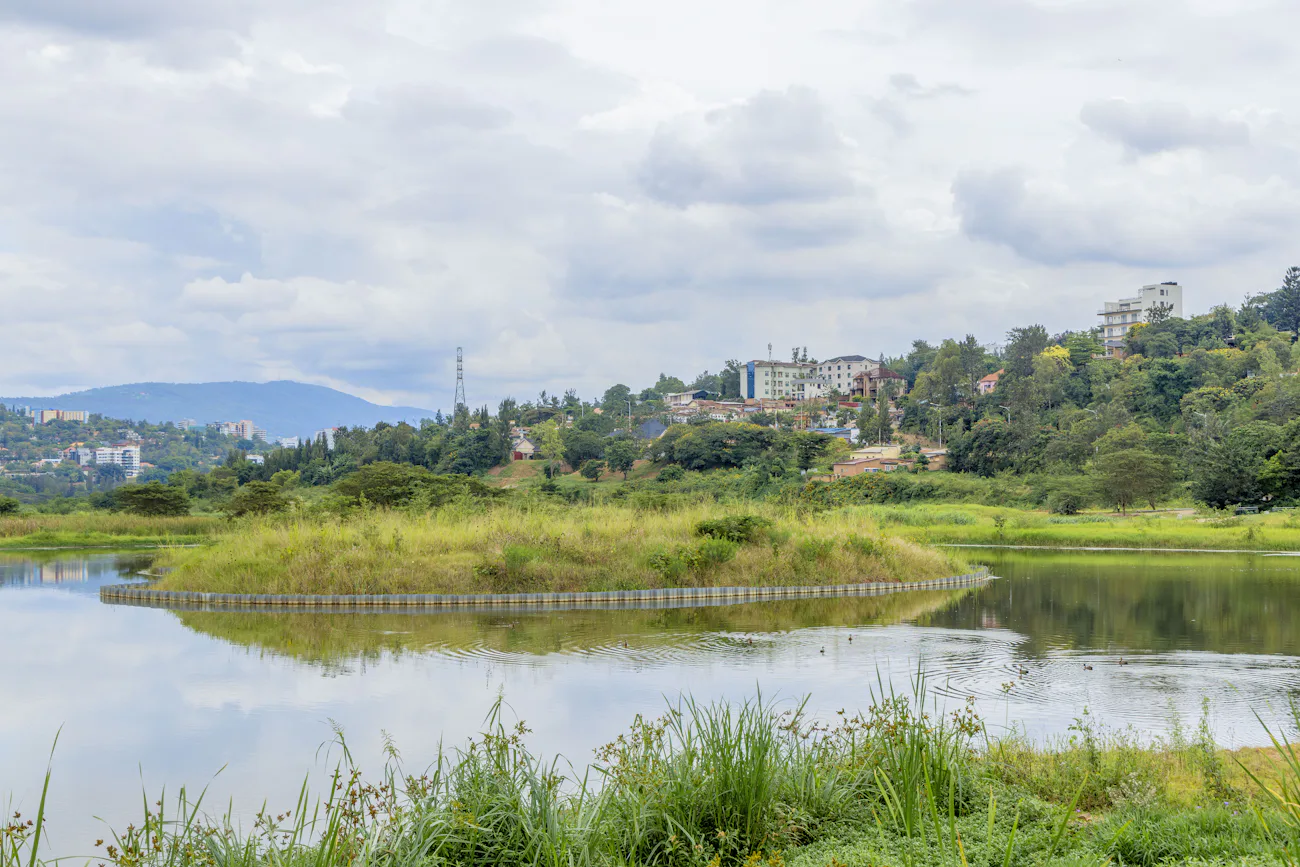
Africa’s cleanest, calmest capital — cafés, galleries and a warmth that recasts the region — and home to the Genocide Memorial, a necessary, quietly devastating hour that deepens everything that follows.
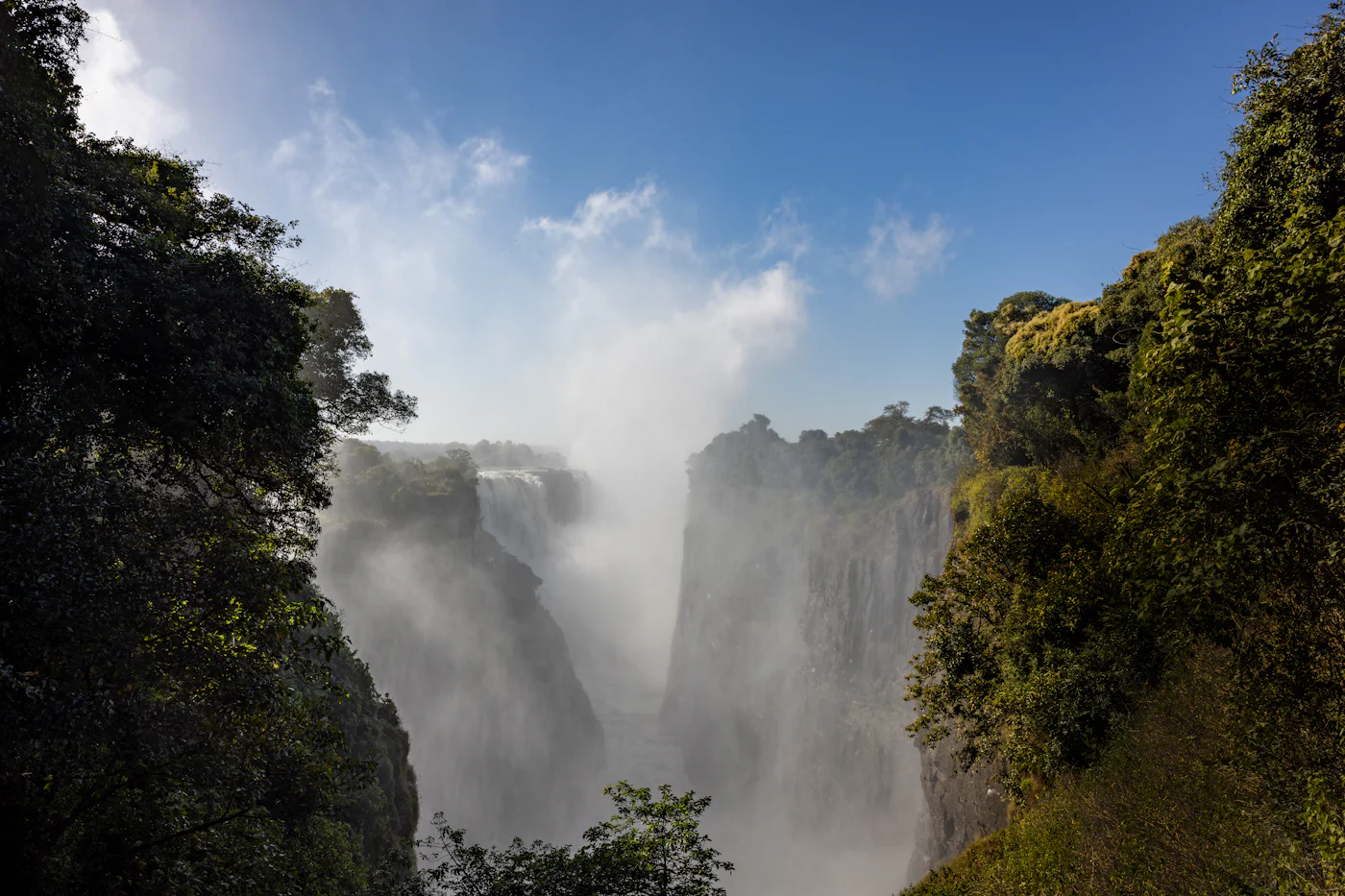
The Zambezi arrives quiet and wide, then falls off the edge of the world. The Victoria Falls — Mosi-oa-Tunya, “the smoke that thunders” — throw up a mist you can see for miles. But Zambia’s real secret is South Luangwa, birthplace of the walking safari, where you leave the vehicle behind and track lion and leopard on foot.
Tap a place to read it & see its journeys
Victoria Falls
Mosi-oa-Tunya, “the smoke that thunders” — a mile-wide curtain of the Zambezi falling into a gorge, throwing spray you can see for miles. At low water, Devil’s Pool opens on the Zambian edge.
The birthplace of the walking safari, and still the finest place on earth to do it: on foot with an armed scout and a specialist guide, reading tracks and dung and broken grass. Africa for those who want to feel it.
Canoe safaris drifting past drinking elephants and pods of hippo on a broad, tranquil river beneath the escarpment — one of the most peaceful ways to be close to big game anywhere.
Each year a quiet miracle arrives in the heart of the Kalahari: the Okavango, a river that never reaches the sea and spreads instead into a vast, glittering delta. Glide its channels by mokoro. To the north, the Chobe River draws the greatest elephant herds on the continent to its banks at dusk.
Tap a place to read it & see its journeys
Okavango Delta
A river that never reaches the sea, spreading into a glittering maze of channels and islands in the heart of the Kalahari. Glide it by mokoro — a poled dugout canoe — at eye level with lily, reed and the ripple of something large nearby.
The greatest elephant concentrations on the continent gather on the Chobe River at dusk — thousands strong, throwing dust and water in the last gold light, best watched from a boat drifting quietly among them.
The reserve at the delta’s heart, holding superb lion, leopard and endangered wild dog across a mosaic of land and water — some of the richest game viewing in Southern Africa.
Vast, silent desert that comes alive after the rains: black-maned lions, meerkats standing sentinel, and the shimmering salt of the Makgadikgadi pans under some of the darkest skies on earth.
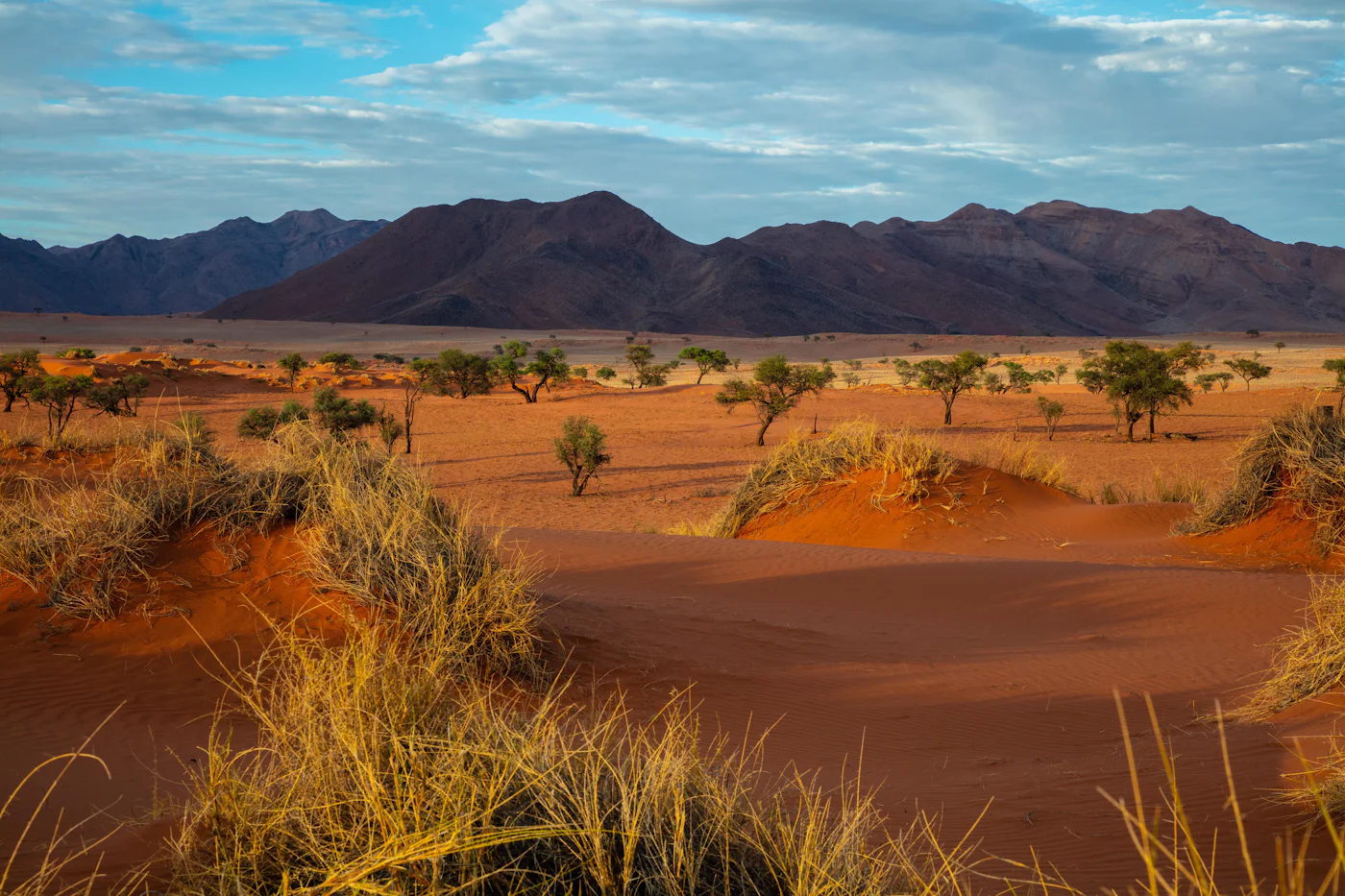
Namibia is the empty quarter of the safari world, and the emptiness is the whole point. Climb a dune at Sossusvlei before dawn and watch the sun set fire to a sea of orange sand, then walk onto the cracked white floor of Deadvlei. Search the pan of Etosha for lion and rhino, and follow the fog-bound Skeleton Coast where the desert walks into the Atlantic.
Tap a place to read it & see its journeys
Sossusvlei & Deadvlei
Some of the highest sand dunes on earth, fire-orange at dawn, and beyond them Deadvlei — a cracked white clay pan where blackened camel-thorn trees have stood dead for some 900 years. One of the planet’s most otherworldly sights.
A vast salt pan whose waterholes draw lion, elephant, rhino and more into easy view through the dry season — and whose floodlit rest-camp waterholes offer rare after-dark sightings, black rhino especially.
A fog-bound Atlantic shore where the desert walks straight into the sea — strewn with shipwrecks and whale bone, roamed by desert-adapted elephant and lion. Namibia at its most elemental.
The remote Kaokoland in the north-west, home to the Himba, who still live much as they have for centuries — met with respect and on their terms, a rare and humbling encounter.
They call it the world in one country, and for once the phrase earns its keep. Track the Big Five through the Kruger at first light, then trade bush for the Panorama Route above the Blyde River Canyon. Drive down to Cape Town, follow the Garden Route, and end where you should — a long table in the winelands, the light going soft.
Tap a place to read it & see its journeys
Kruger
One of Africa’s great national parks and its adjoining private reserves (Sabi Sands and others), delivering the Big Five and superb, close big-cat sightings — off-road and after dark in the concessions, excellent-value self-drive in the park itself.
One of the largest green canyons on earth, the scenic highlight of the Panorama Route on the escarpment above the Kruger lowveld — waterfalls, viewpoints and the Three Rondavels.
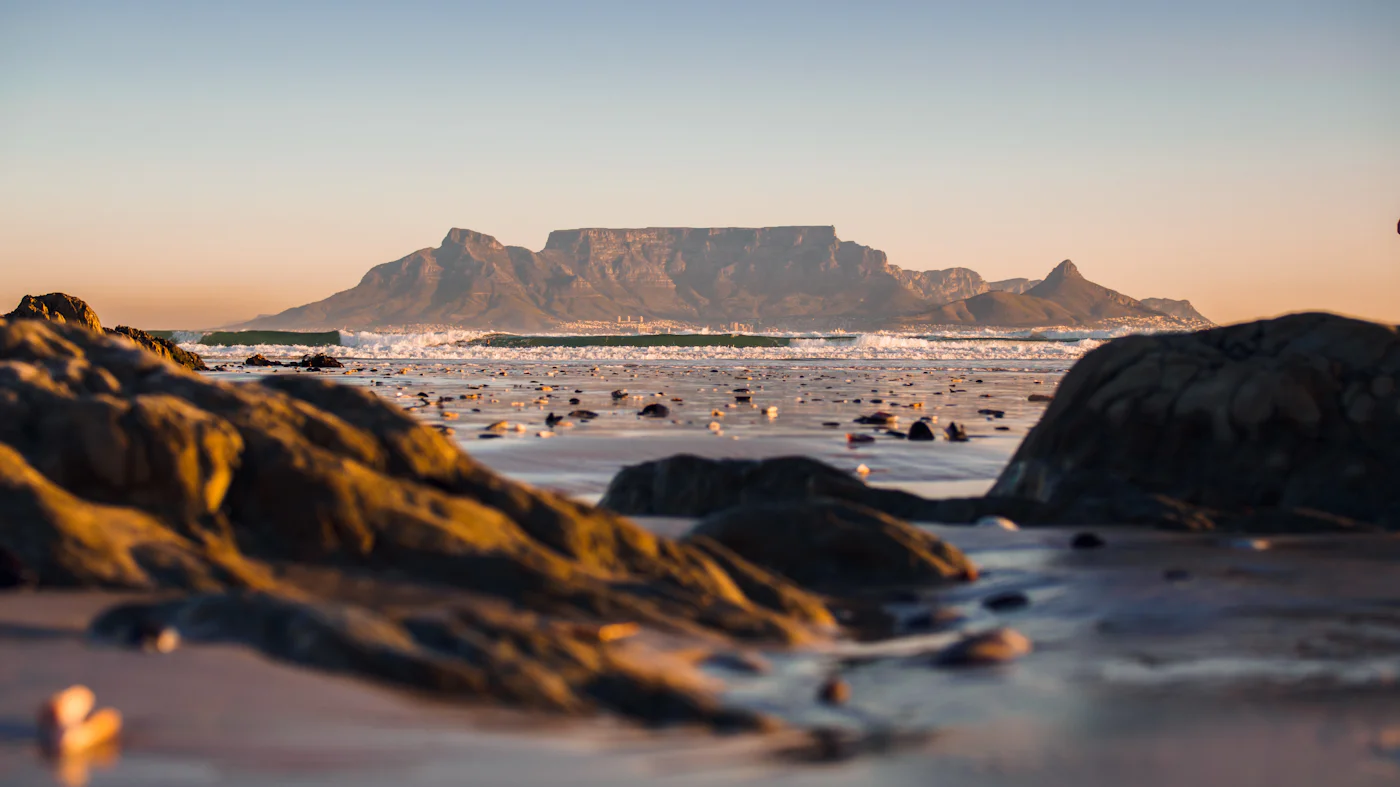
Where a flat-topped mountain meets two oceans: Table Mountain and its cableway, the penguins of Boulders Beach, the Cape of Good Hope, and whales rolling in the bay in season. One of the world’s great cities.
A coast of forest, lagoon and beach winding east from Cape Town — easy, beautiful self-drive country, with whale-watching, ancient forests and the wild Tsitsikamma shore.
Stellenbosch and Franschhoek — Cape Dutch estates among the vines, world-class wine and long lunches under the oaks, an hour from Cape Town and the perfect soft landing.
The best journeys rarely stop at one. These are the cross-border routes our travellers request most — each a natural pairing, each drawn by hand around your dates. Prices are from-rates per person sharing.
Most booked
Tanzania & Zanzibar
10 days · from $4,300
The Migration and the crater, then the sea — savanna dust rinsed off in warm Indian Ocean water. Our single most requested journey.
Send us the place, the package or the combination that reached you, and we’ll draw the rest by hand: the route, the pace, the camps, the quiet mornings. One country or a continent’s worth. A travel designer replies within two hours, 7am–11pm EAT.
 01
01