May to October, the dry season: clear skies for the dunes and, crucially, Etosha’s game concentrating at waterholes from July to October when it is easiest to see. The desert is technically year-round — the dunes don’t care about seasons — but summer (Nov–Mar) brings fierce heat and occasional flash floods. For the classic Namibia of photographs, come in the cooler dry months.
Namibia
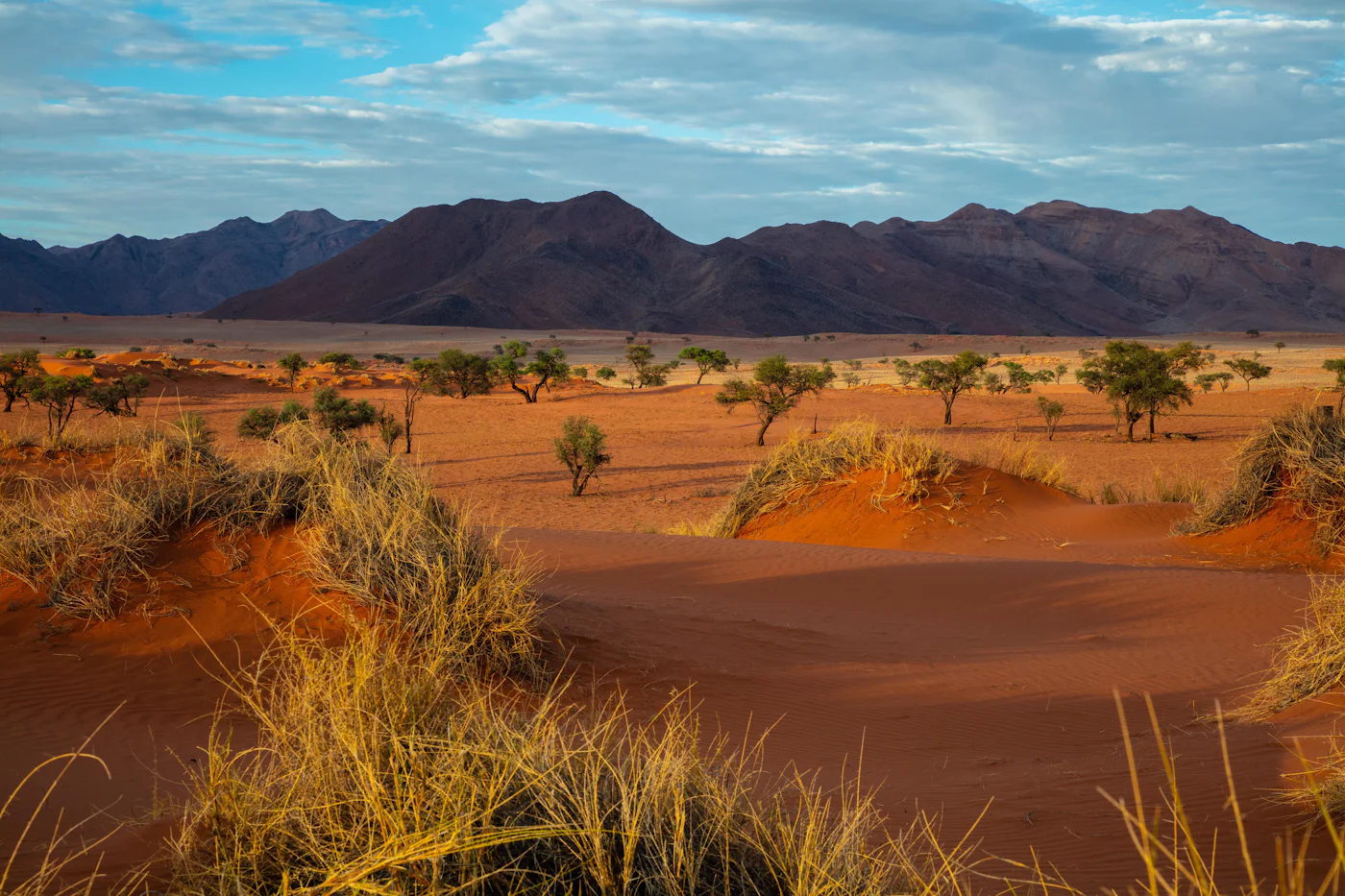
The empty quarter of the safari world, and the emptiness is the whole point. Dunes the colour of fire, silence you can hear, space without end.
| Best for | Landscape and photography, dunes, solitude, a completely different kind of Africa |
|---|---|
| Time needed | 8–12 nights — distances are vast; this is a road journey or a fly-in circuit |
| Getting there | Fly via Windhoek; self-drive or light-aircraft between regions |
| Best months | May–Oct dry and clear; Etosha game peaks Jul–Oct; dunes are year-round |
| Pairs with | Botswana and Zambia for a full southern circuit |
When is the best time to visit Namibia?
Should you self-drive or be guided?
Namibia is one of the few African destinations where self-driving is genuinely rewarding: good roads, low traffic, and the freedom to stop for two hours because the light demanded it. It suits confident, independent travelers. But a guided fly-in circuit saves days of driving over huge distances, puts an expert eye on the wildlife and the geology, and is far less tiring. We build both — and often a hybrid: self-drive the scenic south, fly the long empty north.
Honest trade-offs
- It is about landscape more than big game. Etosha delivers excellent wildlife, but if the Big Five is your only goal, pair Namibia with Botswana. Come here for the earth itself.
- Distances are enormous. Underestimating drive times is the classic first-timer mistake. We pace it honestly — fewer stops, properly savored, beats a blur.
- Dawn is non-negotiable at Sossusvlei. The gate opens at sunrise and the dunes are best in the first hour, before heat and haze. We stay inside the park boundary so you’re first up.
Namibia questions we answer every week
What is Deadvlei?
A white clay pan at Sossusvlei, ringed by giant orange dunes, where blackened camel-thorn trees have stood dead for some 900 years — too dry to decompose. Against the white floor, orange dunes and blue sky, it is one of the most photographed and otherworldly places on earth. Reaching it means a short walk over sand from the 2×4 parking.
Is Etosha worth including?
Yes, especially July–October, when animals crowd the waterholes and game viewing is as easy as sitting still and waiting. Etosha’s floodlit waterholes at the rest camps also offer rare after-dark sightings — rhino in particular. It balances Namibia’s landscape with genuine wildlife.
Is Namibia good for families or first-timers?
It’s superb for older children and photographers, and a wonderful contrast for those who’ve safaried before. For a first-ever African trip focused on the Big Five, we’d usually start you in East Africa or Botswana and save Namibia for the landscape chapter of a bigger journey.